6-Side Vision Inspection Machine
Model: CVA-400
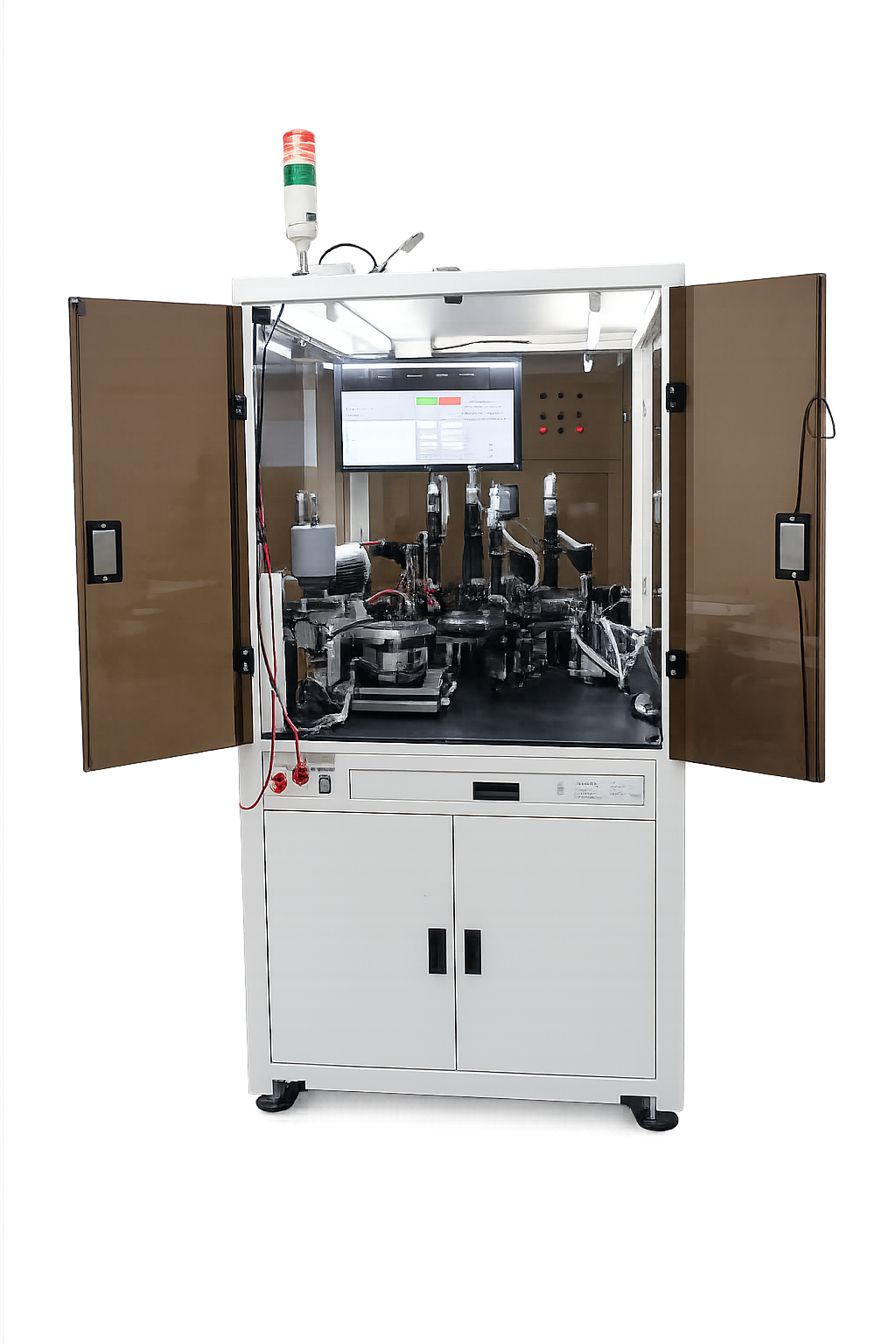
Product Overview
This system is suitable for visual defect inspection and basic dimensional measurement of micro components such as MLCC, MLCI, chip resistors, diodes, LEDs, QFN, and nuts. It combines bowl-feeder alignment with linear output feeding, then transfers parts via glass disk to cameras and collection systems for final sorting. A high-precision trigger system ensures blur-free imaging, while special reject design avoids material mixing and enables throughput above 12,000 pcs/min.
Why Choose CVA-400
Focused on high-speed sorting, 6-side inspection, and stable judgment to reduce false calls and mixing risk while improving line controllability.
Equipment Gallery
Equipment Front View

6-Side Imaging Module

Vibratory Feeding Mechanism

Main Screen Overview

Hardware Settings Page

Software Parameter Page

Vision Simulation Page
Overview Video
AOI System Overview Video
Inspected part: 3mm x 3mm QFN chip; feed speed approx. 1,000 pcs/min.
Air Ejection Validation Video
Inspected part: 0201 MLCC; feed speed approx. 5,000 pcs/min.
QFN Chip Inspection Demo Video
Inspected part: 3mm x 3mm QFN chip; feed speed approx. 1,000 pcs/min; bowl feeder supports side recognition.
R0603 Resistor Inspection Demo Video
Key Features
- Uses 64-bit Windows 10/11, combining embedded-machine reliability with PC-level usability.
- High-speed industrial cameras with standard Ethernet transfer eliminate dedicated frame-grabber cards for simpler maintenance.
- Adjustable-magnification lenses support parts from 0.6mm to 8mm.
- Five collection bins with high-speed air nozzles and independent drive circuits provide both sorting efficiency and stability.
- In-house software/hardware enables rapid adjustment to customer process conditions.
Implementation Use Cases
We have CVA-series sales and implementation experience in Yangmei, Kunshan, Suzhou, and Guangdong. We can recommend inspection workflows by each plant's process conditions.
If you share part size, target throughput, and primary defect types, we can help evaluate suitable inspection solutions and parameter directions.
Applications
- Chip single capacitors/inductors (MLCC / MLCI)
- Chip array capacitors/inductors (MLCC Array / MLCI Array)
- Chip single/array resistors (Resistor Chip / Array)
- Components including diodes, LEDs, QFN chips, NR inductors, and small nuts
Primary Inspection Items
- Size/pitch checks: part size, electrode size/ratio, and electrode spacing.
- Visual defects: body contamination, cracks, tin stains, electrode blackening/shape defects, and electrode bending.
- Special checks: marking, glue overflow, foreign-material jam, through-hole, and color-difference inspection.
Datasheet and Resources
FAQ
Does it support 0201 component inspection?
Yes. Parameters and sampling recommendations are evaluated by component size, defect type, and target speed.
Can unstable judgments after material changeover be improved?
Yes. Image-condition standardization and workflow tuning reduce variation from operators and lots.
What information should be provided first?
Please provide part size, target throughput (pcs/min), primary defect items, and site constraints.